🏆 #1 Tripadvisor ⭐ 4.9 · 1,138 Reviews 🔥 Selling Fast

Baby Sea Turtle Release Tour in Puerto Escondido

Escobilla Sanctuary· Official SEMARNAT site
Certified Guide· Conservation expert
Sunset Timing· Golden hour release

Starting from — per person

$1,200.00

★★★★★4.9 · 1,138 reviews
⏱️ Duration3 hours
🚐 Hotel PickupIncluded (Puerto Escondido)
👨‍👩‍👧 AgesAll ages welcome
✅ ConfirmationInstant confirmation
🔥 This tour frequently sells out — book early

Free cancellation up to 24h before

Experience of a Lifetime

Tour Highlights

Baby Turtle Release at Sunset
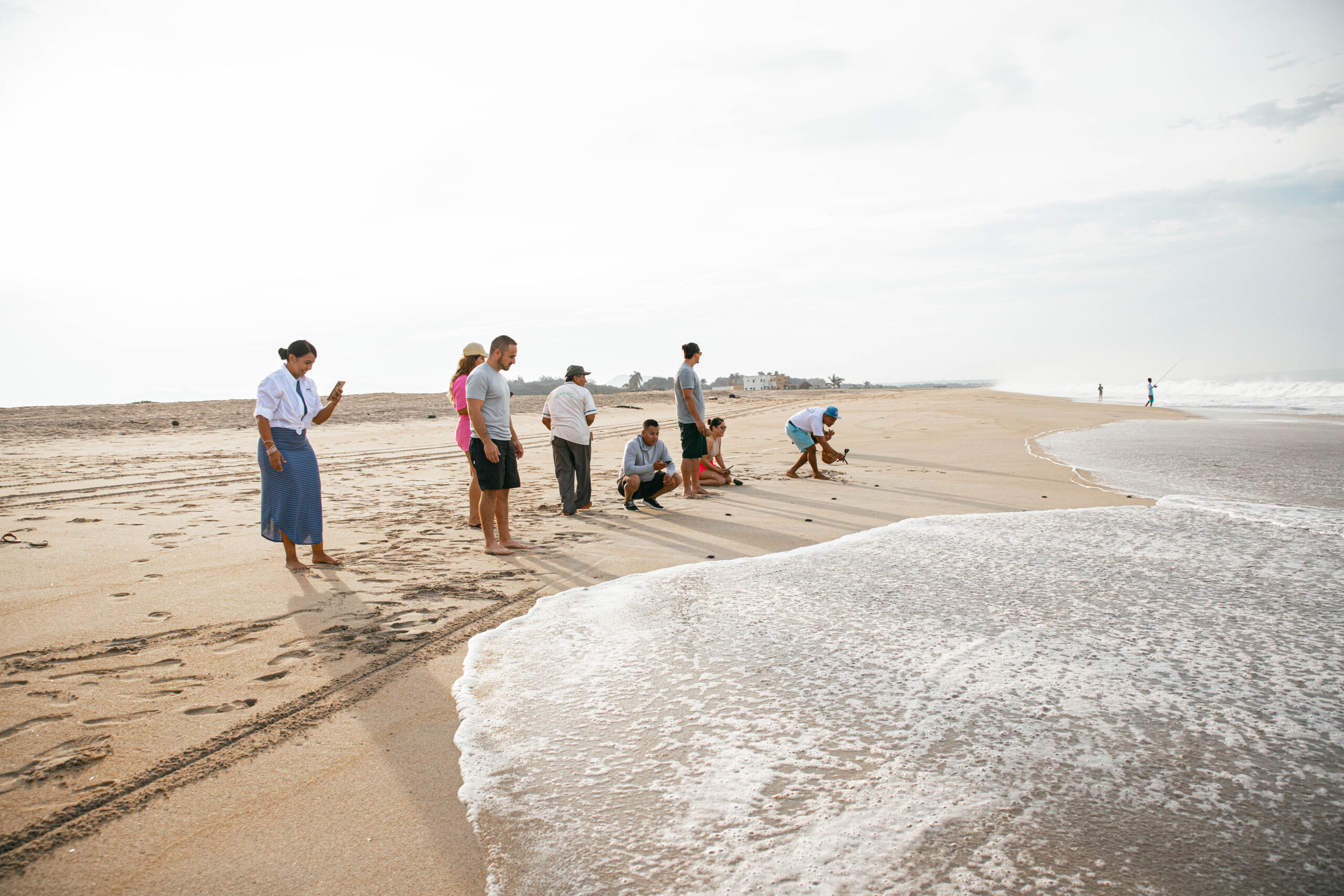
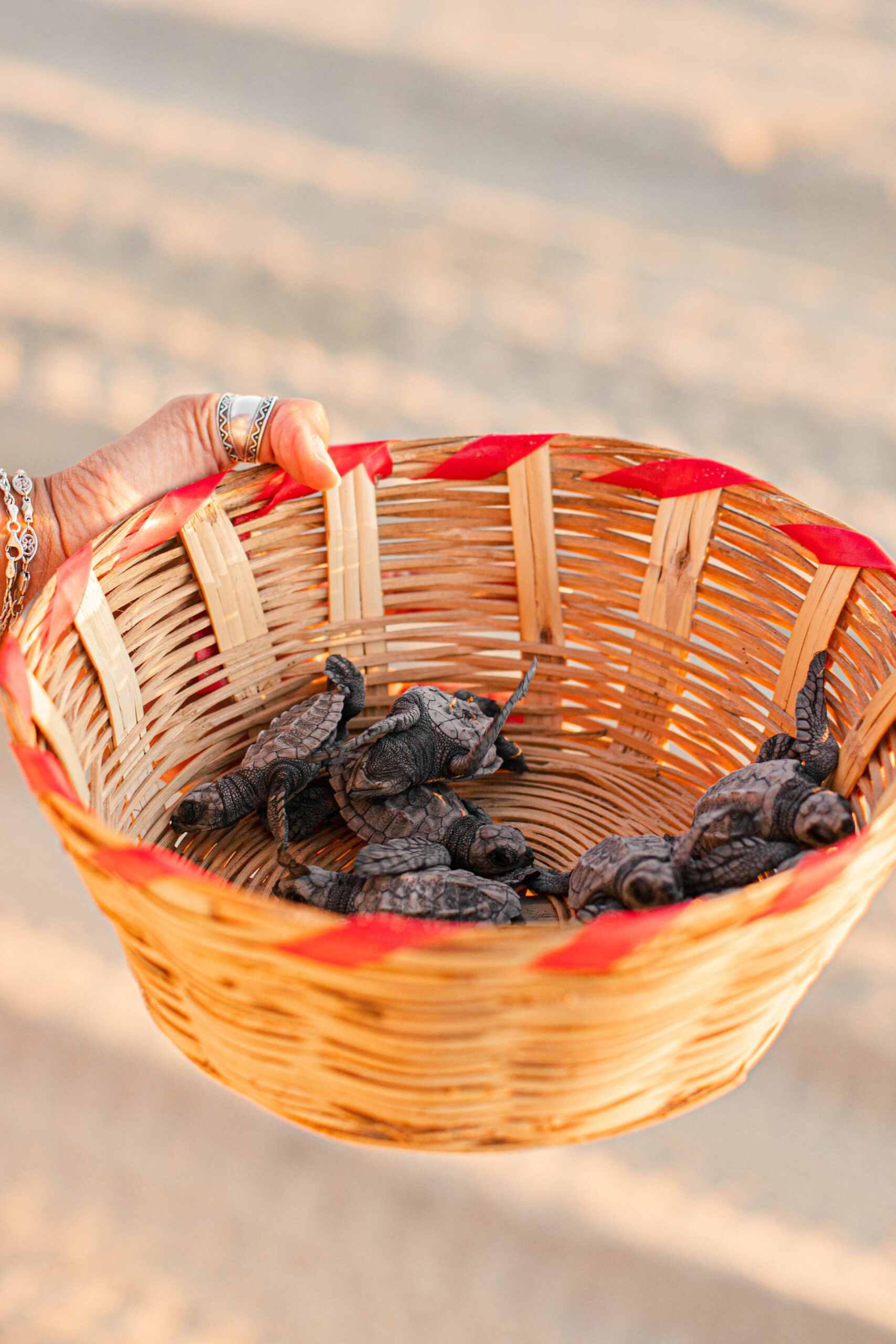
Watch olive ridley hatchlings take their first steps toward the Pacific as the sun sets over Escobilla — timed perfectly for the golden hour.
One of the World's Largest Nesting Beaches
Playa Escobilla hosts some of the largest olive ridley arribada events on earth — mass nesting of up to 500,000 turtles in a single season.
Real Conservation in Action
Your entrance fee funds sanctuary operations, egg protection, and the community conservation workers who patrol against poaching year-round.
Expert Conservation Guide
A guide affiliated with the Escobilla sanctuary who explains the full sea turtle life cycle, the arribada phenomenon, and the decades of conservation work behind what you're seeing.
All Ages — Deeply Meaningful
The most emotionally powerful wildlife experience on the Oaxacan coast — appropriate for all ages and consistently described as a life highlight by guests of every background.
Small Groups Only
Intimate group sizes to minimize disturbance to nesting areas and hatchlings — every guest gets close access and the guide's full attention throughout.

About This Experience

There is a moment at Escobilla Beach, just as the sun is going down, when a baby sea turtle emerges from the sand — eyes open for the first time, flippers moving in the particular urgent way that seems to already know the direction of the ocean — and begins the most statistically improbable journey in nature.

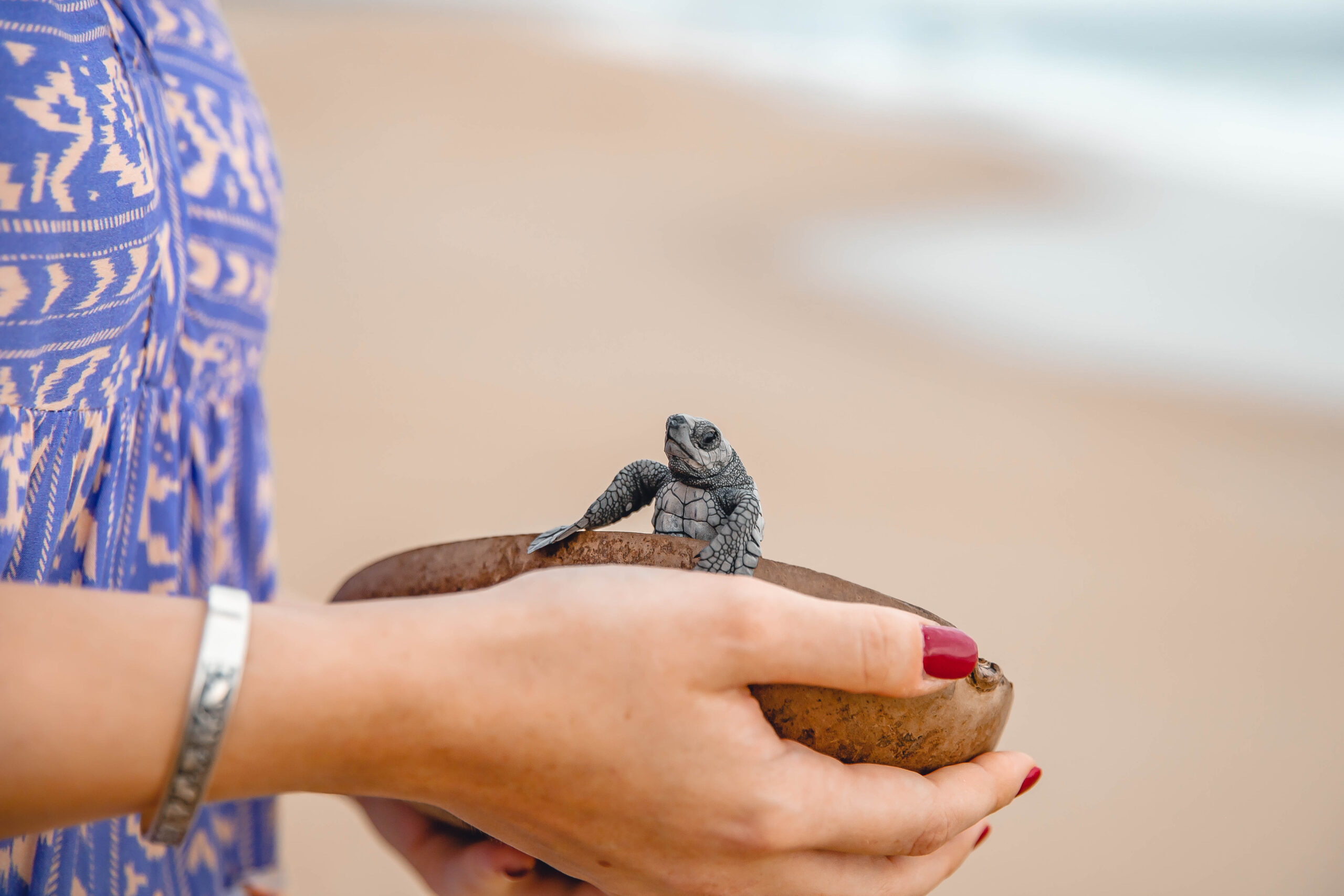
One in a thousand olive ridley sea turtles survives to adulthood. The ones that do return to the same beach where they hatched, navigate thousands of kilometers of open ocean using the Earth’s magnetic field, and live for up to 50 years. The one in front of you, right now, weighs less than 20 grams. It has never seen water. And it is already moving toward it.

Nothing prepares you for watching this happen in person. No photograph, no documentary, no description. You have to be there.

Escobilla Beach — One of the Largest Sea Turtle Nesting Sites in the World

Playa Escobilla is not just an important sea turtle nesting beach. It is one of the most significant nesting sites for olive ridley sea turtles on the planet — a stretch of Pacific coast where the phenomenon known as an arribada occurs: mass synchronized nesting events in which tens of thousands of female turtles emerge from the ocean simultaneously to lay eggs on the same beach on the same night.

During peak arribada events at Escobilla, the beach is so densely covered with nesting females that turtles dig up each other’s nests. An estimated 100,000 to 500,000 olive ridley turtles nest at Escobilla in a single season. It is one of approximately ten beaches in the world where this phenomenon occurs, and the largest on the Pacific coast of Mexico.

The beach is managed as a protected sanctuary under SEMARNAT — Mexico’s national environmental agency — with conservation programs that have been operating for decades. The guides on this tour are affiliated with the sanctuary and work directly within its conservation framework. Your entrance fee funds the protection of the nesting beach, the egg incubation program, and the community conservation workers who patrol the beach year-round against poaching.

The Olive Ridley Sea Turtle — What You’re About to Witness

The olive ridley (Lepidochelys olivacea) is the most abundant sea turtle species in the world — and that abundance is entirely the result of places like Escobilla and the conservation programs that protect them. In the 1960s and 70s, olive ridley populations collapsed due to commercial harvesting of eggs and adults. Mexico’s protection programs, beginning in the 1970s and expanding through the 1990s, have been the primary driver of the species’ recovery.

The baby turtles you watch enter the ocean on this tour are the direct result of that conservation work. They hatched from eggs that were either protected in situ or moved to the sanctuary’s incubation corrals when natural nesting conditions were compromised. Your guide explains the full cycle — from nesting behavior and incubation to the hatchling’s navigation to the ocean and the decades of open-ocean life that follow for the survivors.

It is the most educational wildlife experience on the Oaxacan coast, and the most emotionally resonant.

Full Experience — Your Afternoon at Escobilla Sea Turtle Sanctuary

Hotel Pickup — 4:30 PM from Puerto Escondido

Pickup from your accommodation in Puerto Escondido at 4:30 PM for the 35-minute drive to Escobilla Sanctuary. The afternoon departure is timed precisely — arriving at the sanctuary as the sun begins to lower puts you on the beach during the golden hour that precedes the release, and the releases themselves happen most frequently in the late afternoon and early evening when the sand begins to cool. Your guide covers sea turtle biology, conservation history, and Escobilla’s significance during the drive.

Arrival at Escobilla Sanctuary — Orientation & Conservation Briefing

At the sanctuary, your guide gives a complete briefing before approaching the nesting areas: the rules of the sanctuary, why flash photography is strictly prohibited (artificial light disorients hatchlings and causes them to move away from the ocean), how to behave around nesting females and hatchlings without disturbing natural behavior, and the specific conservation work happening at Escobilla right now. This context transforms what you’re about to see from a spectacle into something you genuinely understand.

The Turtle Release — Baby Olive Ridleys Take Their First Steps

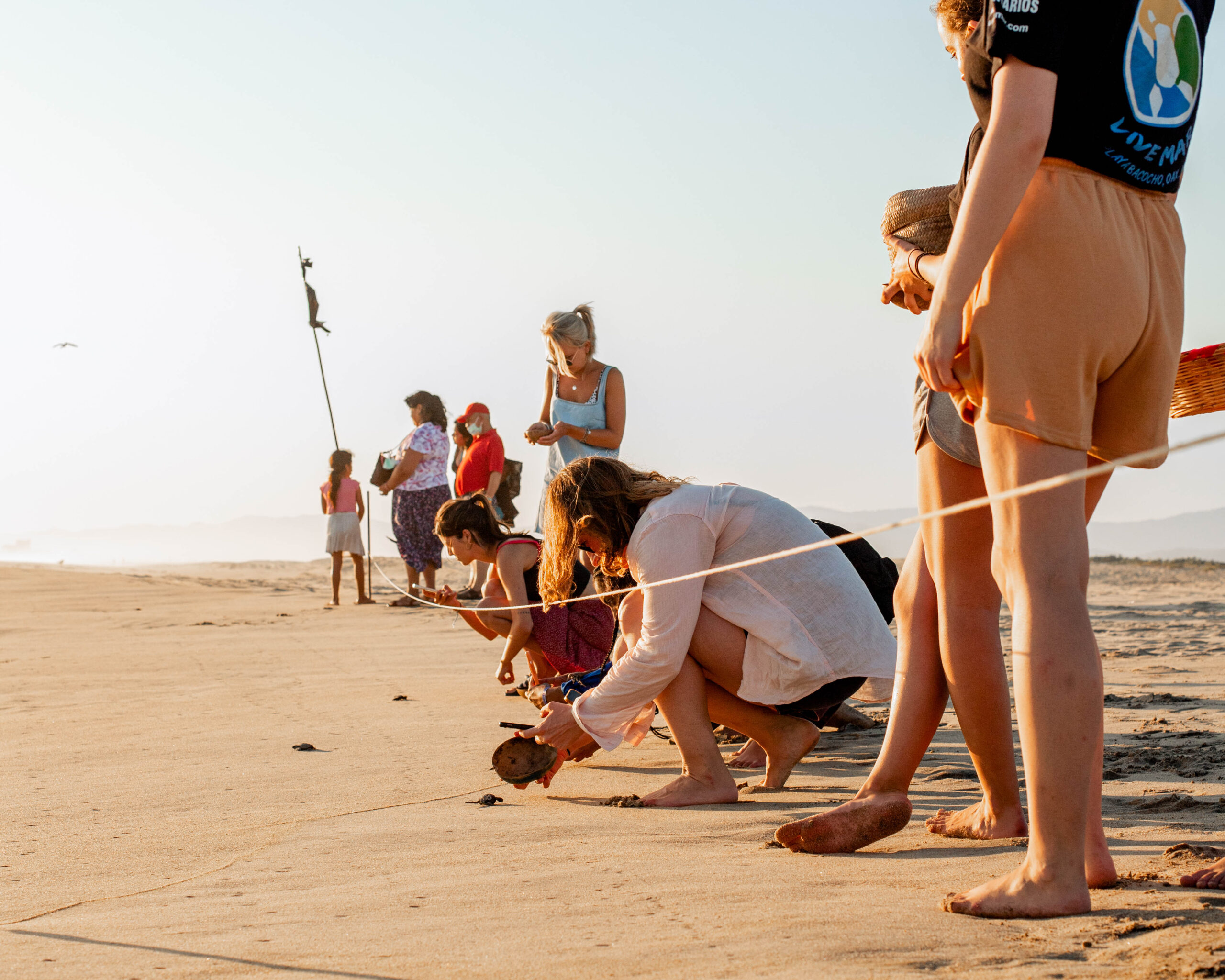
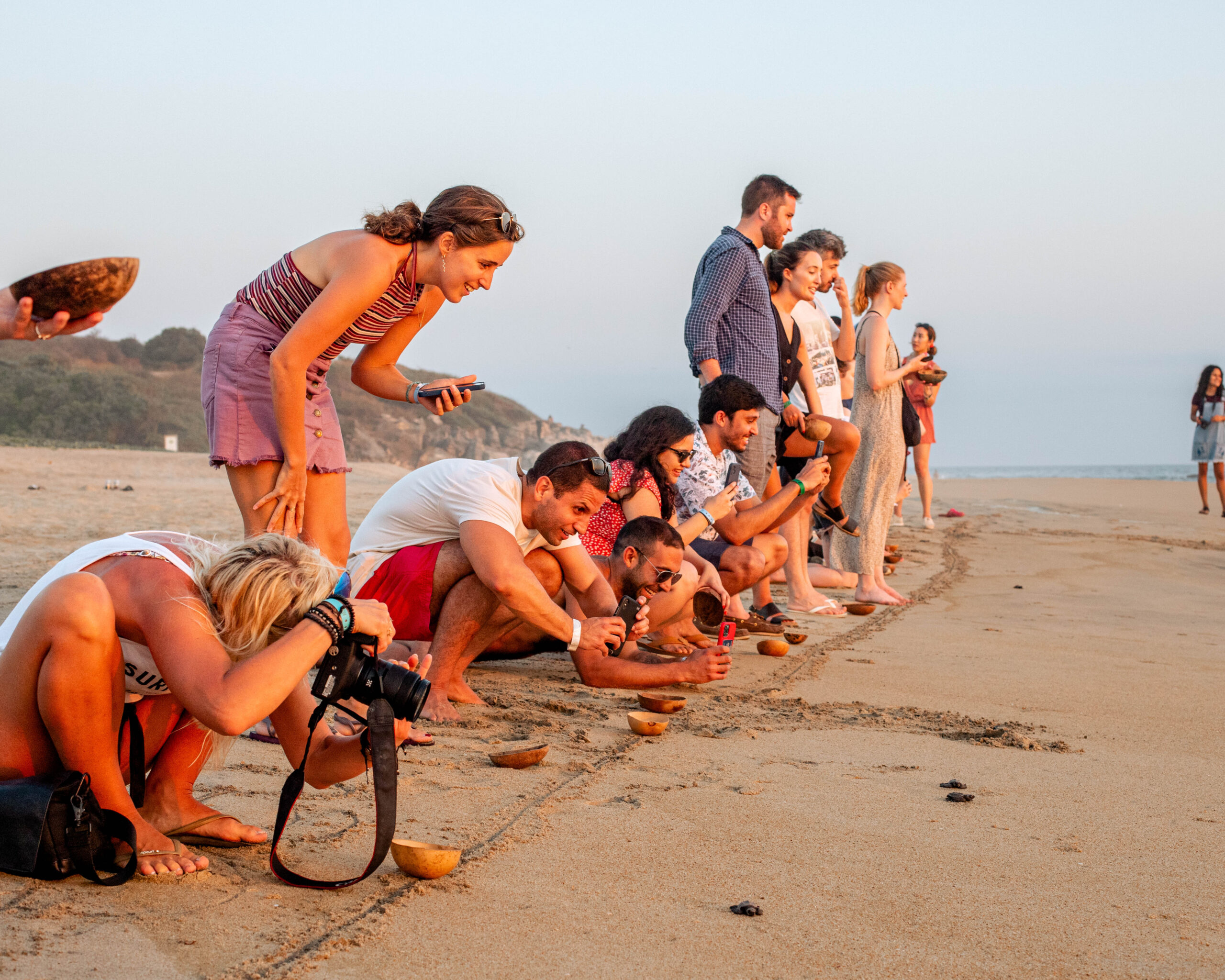
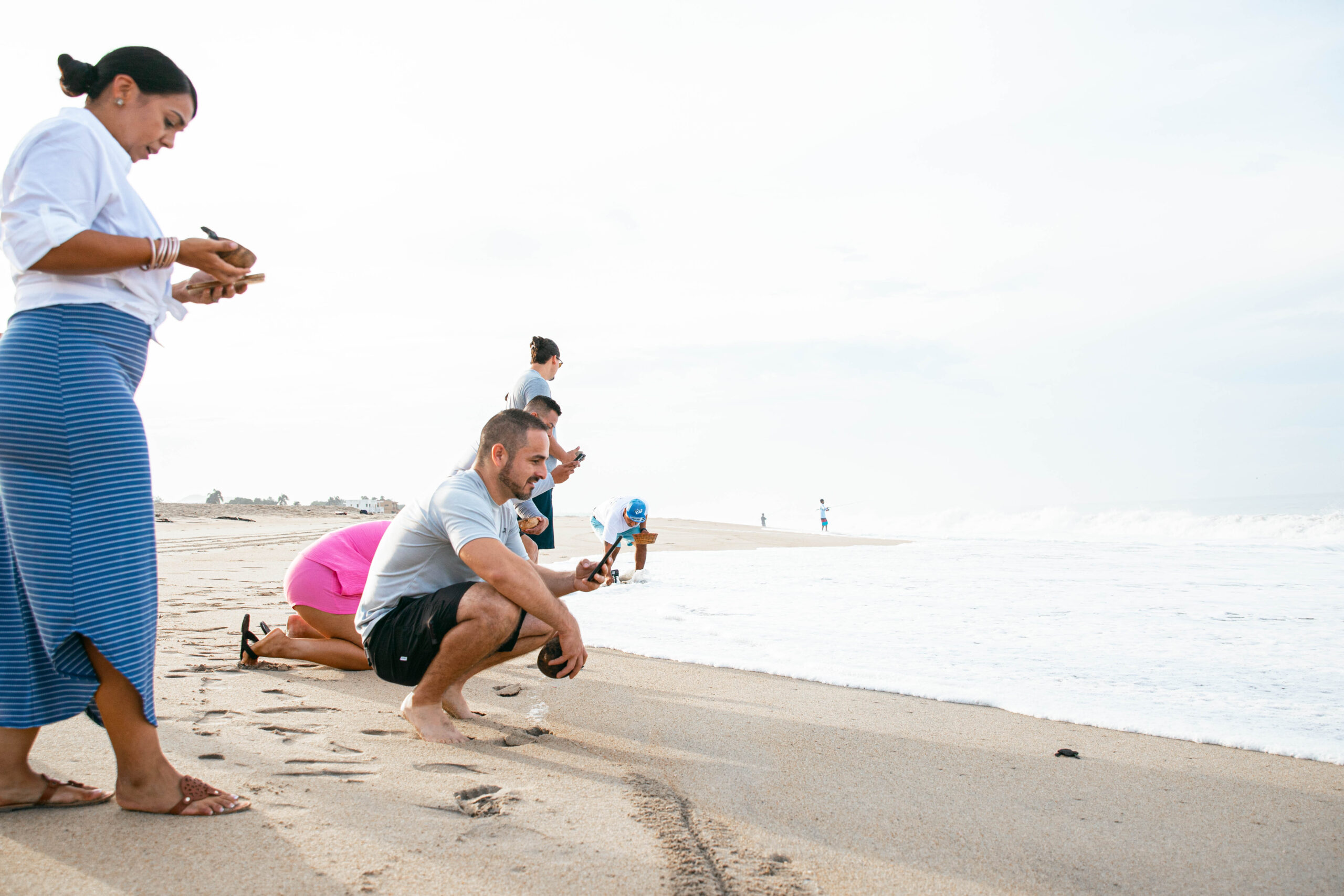
The release takes place on the beach as the light fades. Hatchlings emerge from the incubation corrals — tiny, perfect, and completely determined. They orient toward the ocean using the light on the horizon and begin moving across the sand in the characteristic urgent crawl that has not changed in 100 million years of turtle evolution.

You watch. You do not touch. The guide has explained that handling hatchlings interferes with the imprinting process — the mechanism by which each turtle encodes the magnetic signature of its birth beach, the information it will use to return here in 10 to 15 years to nest. What looks like a simple crawl across 20 meters of sand is actually the beginning of a navigation system being calibrated for a lifetime of open ocean travel.

The first turtle reaches the water. The wave takes it. It is gone.

Most guests go quiet at this point. Some cry. All of them understand, in a way that no classroom or documentary produces, why these animals are worth protecting.

Sunset at Escobilla Beach

The timing of the 4:30 PM departure puts the turtle release against the backdrop of the Oaxacan sunset — the light going gold and red over the Pacific as the hatchlings cross the sand toward it. The beach at Escobilla is long, flat, and unobstructed — the horizon is completely open, and the sunset here is more dramatic than anything visible from the developed beaches in Puerto Escondido. This is not incidental to the tour. The guides know it, and they time the release portion to coincide with it whenever conditions allow.

Return to Puerto Escondido

The vehicle returns you to Puerto Escondido after approximately 3 hours. The drive back is usually the quietest of any tour on the coast. Most guests spend it looking at the photos on their phones, trying to find one that captures what it felt like. None of them do. But they try.

Sea Turtle Conservation at Escobilla — Why Your Visit Matters

The olive ridley sea turtle was listed as a vulnerable species by the IUCN following decades of population collapse. The recovery of the Escobilla population is one of the most significant wildlife conservation success stories in Mexico — the result of government protection, community involvement, and ecotourism programs that give local communities economic reasons to protect rather than harvest the turtles.

Every booking on this tour contributes directly to that conservation economy. Entrance fees fund sanctuary operations. The guide’s income depends on the sanctuary’s continued operation. The local communities that participate in ecotourism are the same communities that would otherwise face economic pressure to harvest eggs. When you book this tour, you are not just watching a wildlife event — you are participating in the economic model that makes the event possible.

Turtle Season at Escobilla — When to Go

Olive ridley sea turtles nest at Escobilla year-round, but the season peaks dramatically from July through December. The major arribada events — the mass synchronized nesting nights when the beach fills with tens of thousands of females — occur most frequently during this period, typically triggered by specific lunar phases. Hatchlings emerge approximately 45 to 55 days after nesting, meaning the highest hatchling release activity runs from August through January.

The tour operates year-round because turtles nest and hatch in every month. Outside peak season, releases are smaller but often more intimate — a handful of hatchlings rather than hundreds, with more time to observe each individual. Contact us before booking and we will tell you honestly what to expect on your preferred date.

Private Sea Turtle Release Tour — Up to 24 People

Private tours are available for groups of up to 12 people (1 van) or 24 people (2 vans). A private turtle release experience means the sanctuary visit and guide are exclusively yours — particularly important for families with young children, school groups, and guests who want the educational component delivered at a specific level of depth. Contact us via WhatsApp for availability and pricing.


Sea Turtle Season at Escobilla Beach

Olive ridley turtles nest and hatch at Escobilla year-round, but the season peaks dramatically July through December. Major arribada nesting events occur most frequently August through November. Hatchling releases peak August through January — 45 to 55 days after peak nesting. The tour operates every day of the year. Contact us before booking for current activity levels on your preferred date.

Jul–Dec: Peak Nesting Season
Aug–Jan: PEAK HATCHLING RELEASES
Year-Round: Turtles Always Active
✓ INCLUDED
Round-trip hotel pickup (within Puerto Escondido)
Professional conservation guide
35-minute drive to Escobilla Sanctuary
Escobilla Sanctuary official entrance fees
Conservation briefing and sea turtle education
Baby sea turtle release experience at sunset
Free cancellation up to 24 hours before
✕ NOT INCLUDED
Gratuities for your guide (10–20% appreciated)
Transport from outside Puerto Escondido (available for extra fee)
Meals and beverages
Personal items (insect repellent, sunscreen, comfortable clothing)

⚠️ Important Before You Go

DO NOT use flash photography — artificial light disorients hatchlings and interferes with their navigation imprinting. No exceptions. Do not touch or handle the baby turtles — this disrupts the magnetic imprinting process critical to their survival. Wear comfortable clothing and bring insect repellent (the beach has mosquitoes at dusk). Minimum 4 participants required to confirm. The tour operates in light rain. Wildlife activity cannot be guaranteed — contact us before booking for current hatchling activity at the sanctuary. This tour sells out weeks in advance during peak season (August–January) — book early.

Common Questions

Frequently Asked Questions

The baby sea turtle release tour takes you to Playa Escobilla — one of the largest olive ridley sea turtle nesting beaches in the world — to witness hatchlings emerging from the sanctuary's incubation corrals and making their first journey across the beach to the Pacific Ocean. The tour departs at 4:30 PM from Puerto Escondido, arrives at the Escobilla sanctuary after a 35-minute drive, and is timed to coincide with the sunset — when hatchling releases most frequently occur and the light on the beach is extraordinary. The guide provides full context on sea turtle biology, the arribada phenomenon, and the conservation programs that protect Escobilla year-round.

An arribada is a mass synchronized nesting event in which tens of thousands of female sea turtles emerge from the ocean simultaneously to nest on the same beach on the same night — one of the most dramatic wildlife spectacles on earth. Escobilla is one of approximately ten beaches in the world where this phenomenon occurs, and the largest on the Pacific coast of Mexico. During peak arribada events at Escobilla, an estimated 100,000 to 500,000 olive ridley females may nest on a single beach in a matter of days, triggered by specific lunar phases during the July through December nesting season.

No. Handling baby sea turtles is strictly prohibited at Escobilla Sanctuary and for important biological reasons — when a hatchling crosses the beach to the ocean, it is imprinting the magnetic signature of its birth location, information it will use to navigate back to the same beach to nest in 10 to 15 years. Human handling interferes with this imprinting process and can compromise the turtle's ability to find its natal beach as an adult. Your guide explains this in detail before the release. Observing without touching is the correct approach, and it produces a more meaningful encounter than holding ever would.

Baby sea turtles orient toward the ocean using the natural light on the horizon — the brightest light in their visual field at the time of emergence. Flash photography creates an artificial light source that disorients hatchlings and causes them to move away from the ocean rather than toward it. A disoriented hatchling that moves inland rather than seaward has a significantly reduced chance of survival. Flash photography is prohibited throughout Escobilla Sanctuary without exception. Standard phone photography without flash, and cameras in automatic mode without flash, capture excellent images of the release in the golden sunset light.

The best period for hatchling releases at Escobilla is August through January, corresponding to 45 to 55 days after the peak nesting season (July through December). The highest volume of releases — and the most dramatic experiences — occur during September through November when nesting activity has been at its peak for several months and hatchlings are emerging in large numbers daily. The tour operates year-round because turtles nest and hatch in every month. Outside peak season, releases are smaller but often more intimate. Contact us before booking for current activity levels.

Yes. The tour is available for all ages and is one of the most profound wildlife experiences available for children anywhere in Mexico. Young children respond to baby sea turtle releases with a combination of wonder and instinctive protective impulse that parents consistently describe as one of their most memorable travel moments. The guide adapts the educational content to the age range of the group. The only behavioral requirement — no flash photography, no touching — is simple enough for children of any age to follow when it is explained correctly, which your guide does before the release.

Escobilla Sanctuary operates under the protection of SEMARNAT — Mexico's national environmental agency — with conservation programs that have been running for decades. The sanctuary employs community conservation workers who patrol the beach nightly during nesting season to protect eggs from poaching and natural predation. Eggs at risk are moved to protected incubation corrals where hatch rates are significantly higher than in unprotected nests. Hatchlings from these corrals are released under supervision at the optimal time of day. Entrance fees collected from the tour directly fund these operations.

Sea turtle hatchling releases at Escobilla are not fully predictable — they depend on the timing of the nesting cycle and conditions at the sanctuary on any given day. The sanctuary conducts releases whenever hatchlings are ready, which happens on the majority of days during peak season (August through January) and less frequently outside peak season. We recommend contacting us before booking to ask about current activity levels. If conditions are not suitable for a release on your tour date, the guide will explain the full conservation program, show you the nesting and incubation areas, and provide the complete educational experience — which has significant value independent of a live hatchling release.

Yes. Private tours are available for groups of up to 12 people in one van, or up to 24 people across two vans. A private tour means the sanctuary visit and guide are exclusively yours — particularly valuable for families with young children who want a quieter, more educational experience, school and student groups, and guests who want the guide's full attention for the conservation briefing. Contact us via WhatsApp for availability and pricing for private bookings.

Playa Escobilla is one of approximately ten beaches worldwide where olive ridley sea turtle arribadas occur — mass synchronized nesting events involving tens of thousands of females on a single beach in a matter of days. The scale of nesting activity at Escobilla makes it one of the most significant olive ridley nesting sites on the Pacific coast of Mexico and one of the largest in the world. The recovery of the olive ridley population from near-collapse in the 1970s is directly linked to the protection of sites like Escobilla — making it not just a spectacular wildlife destination but one of the most important sea turtle conservation sites on earth.

Starting from — per person
$1,200.00
⭐⭐⭐⭐⭐ 4.9 · 1,138 reviews
⏱️ Duration3 hours
🚐 Hotel PickupIncluded (Puerto Escondido)
👨‍👩‍👧 AgesAll ages welcome
✅ ConfirmationInstant confirmation
🔥 Tours sell out fast — book early
🎟️ Book Now📱 Make it Private
✓ Free cancellation up to 24h before
What Our Guests Are Saying

Related Tours

Baby Sea Turtle Release Tour in Puerto Escondido

$1,200.00

pro Person
Baby Sea Turtle Release Tour in Puerto Escondido

$1,200.00

pro Person