Boat, Bioluminescence & Sunset
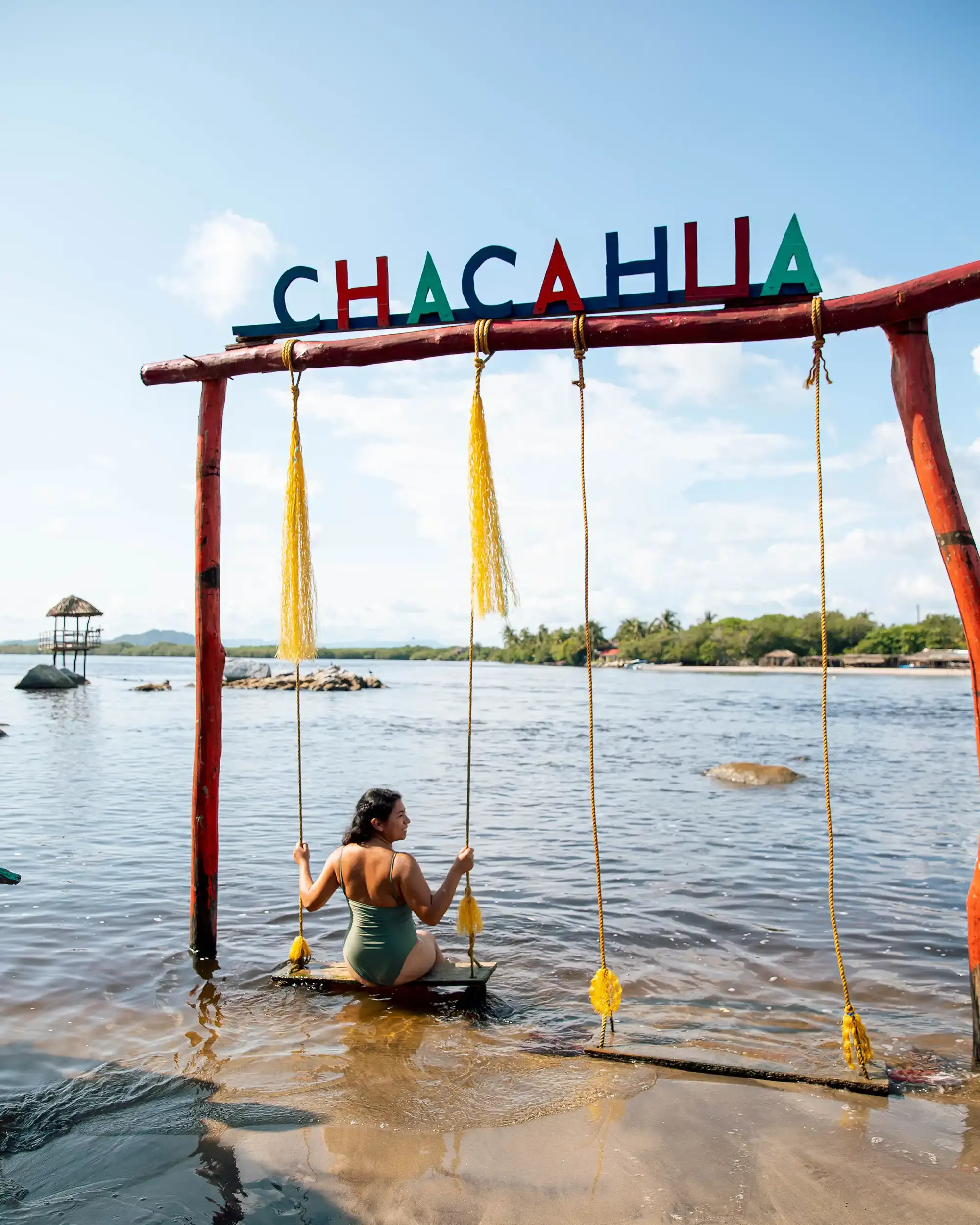
Chacahua Lagoons National Park is one of the most biodiverse and least-visited protected areas on the Mexican Pacific coast — a 14,000-hectare system of lagoons, mangrove forests, and barrier islands that most tourists drive past on the highway without knowing it exists.
This tour goes inside it. A 45-minute boat journey through seven islands and mangrove channels that are home to herons, roseate spoonbills, wood storks, eagles, and crocodiles. A hike to El Arco del Amor — the iconic natural rock arch on the Pacific cliffs — timed for the sunset. And then, after dark, a swim in a bioluminescent lagoon where the water glows around every movement.
Three completely different experiences in one day. Each one would justify the trip on its own.
Chacahua National Park — One of Mexico’s Most Underrated Protected Areas
Lagunas de Chacahua was declared a national park in 1937, making it one of the oldest protected areas in Oaxaca. The park encompasses a complex of coastal lagoons, mangrove forests, barrier islands, and Pacific beach that stretches for 30 kilometers west of Puerto Escondido. It is home to over 150 bird species, American crocodiles, sea turtles, and the freshwater turtle species that gave the town of Chacahua its Nahuatl name.
The lagoon system is managed by the local communities of Zapotalito and Chacahua — Afro-Mexican fishing villages that have inhabited this coastline for generations. The boat captains who navigate the channels are local residents who have worked these waters their entire lives. When you board the boat at Zapotalito, you are entering a living landscape that has been continuously inhabited and managed by the same communities for centuries.
Most visitors to Puerto Escondido never make it here. The tour that does justice to Chacahua requires the full day — and the right guide to make it make sense.
Full Itinerary — Your Day at Chacahua National Park
Hotel Pickup from Puerto Escondido — 12:30 PM
Pickup from your accommodation at 12:30 PM for the one-hour drive west along the Oaxacan coast to Zapotalito. The afternoon departure is intentional — arriving at Chacahua in the late afternoon positions you perfectly for the sunset at El Arco del Amor and the bioluminescent swim after dark. Your guide covers the park’s ecology, history, and the communities that manage it during the drive.
Boat Journey Through 7 Islands & Mangrove Channels
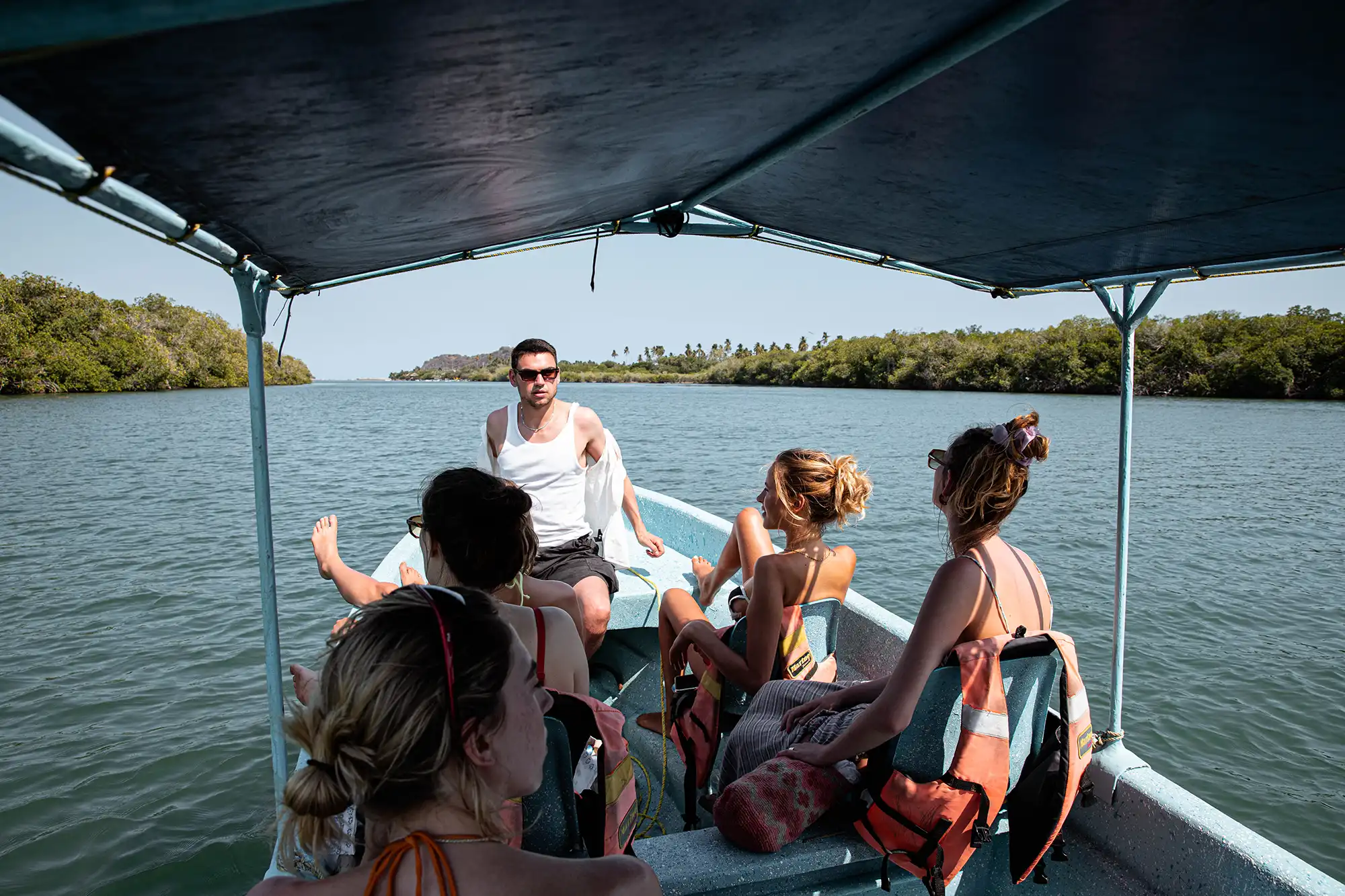
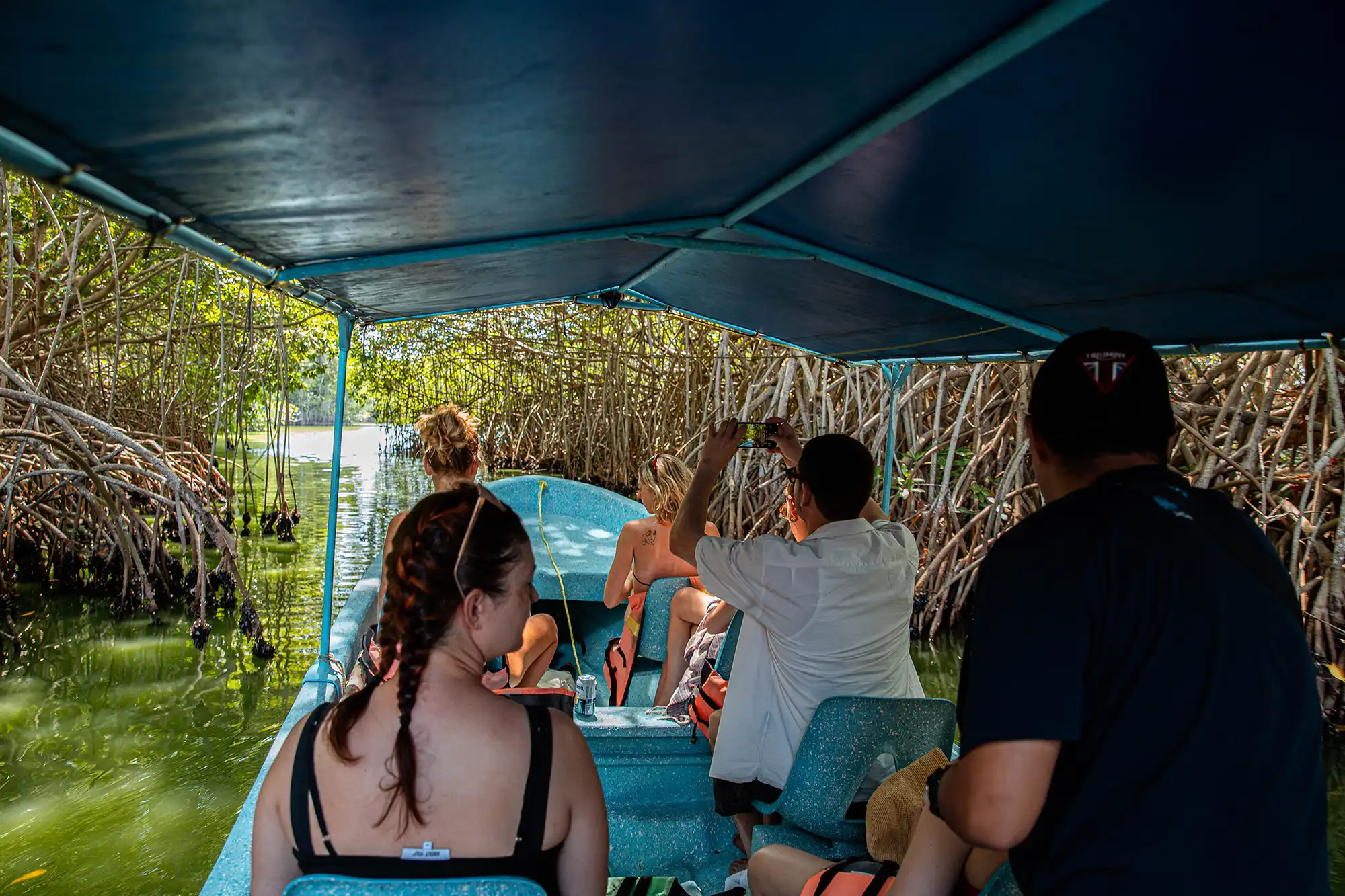
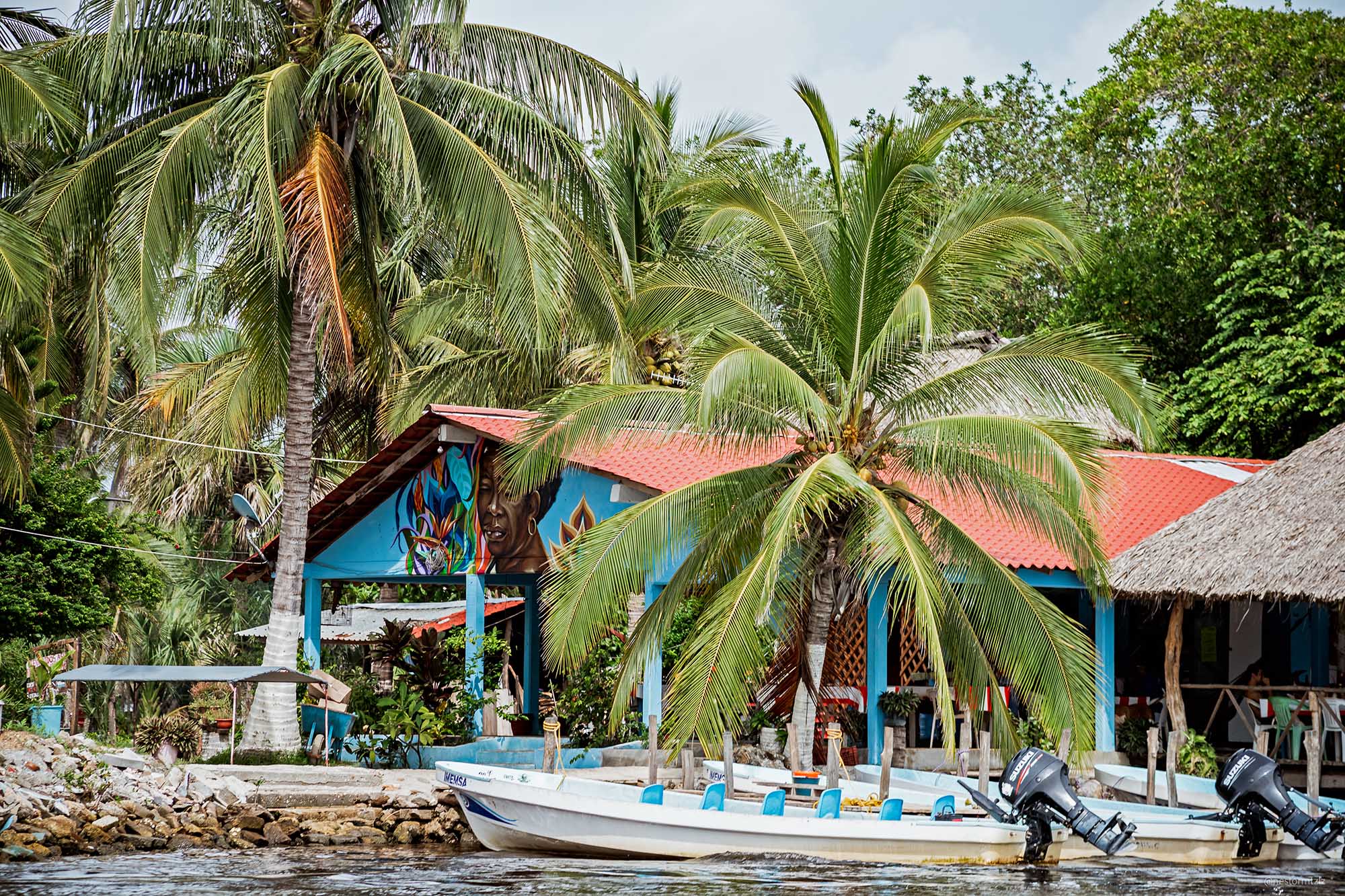
From Zapotalito, you board a boat and enter the lagoon system. The 45-minute journey navigates through seven distinct islands and the mangrove channels that connect them — waterways where the vegetation closes overhead, the water darkens, and the wildlife density increases with every kilometer.
Your captain reads the channels for wildlife as he navigates — pointing out crocodiles on the banks, identifying bird species by silhouette and behavior, and stopping the engine when something worth watching appears. The bird diversity here is extraordinary: herons of multiple species, egrets, kingfishers, magnificent frigatebirds, roseate spoonbills, wood storks, ospreys, and the black-crowned night herons that roost in the mangrove canopy in groups of dozens. On the open lagoon sections between islands, watch the surface for the rolling movement of sea turtles coming up to breathe.
The journey also passes the Tichindas — small freshwater snails endemic to the Chacahua lagoon system that the local Afro-Mexican community has harvested and prepared as traditional food for generations. Your guide explains the cultural and ecological significance of this relationship between the community and the lagoon.
Arrival in Chacahua Village — Local Culture & Traditional Food
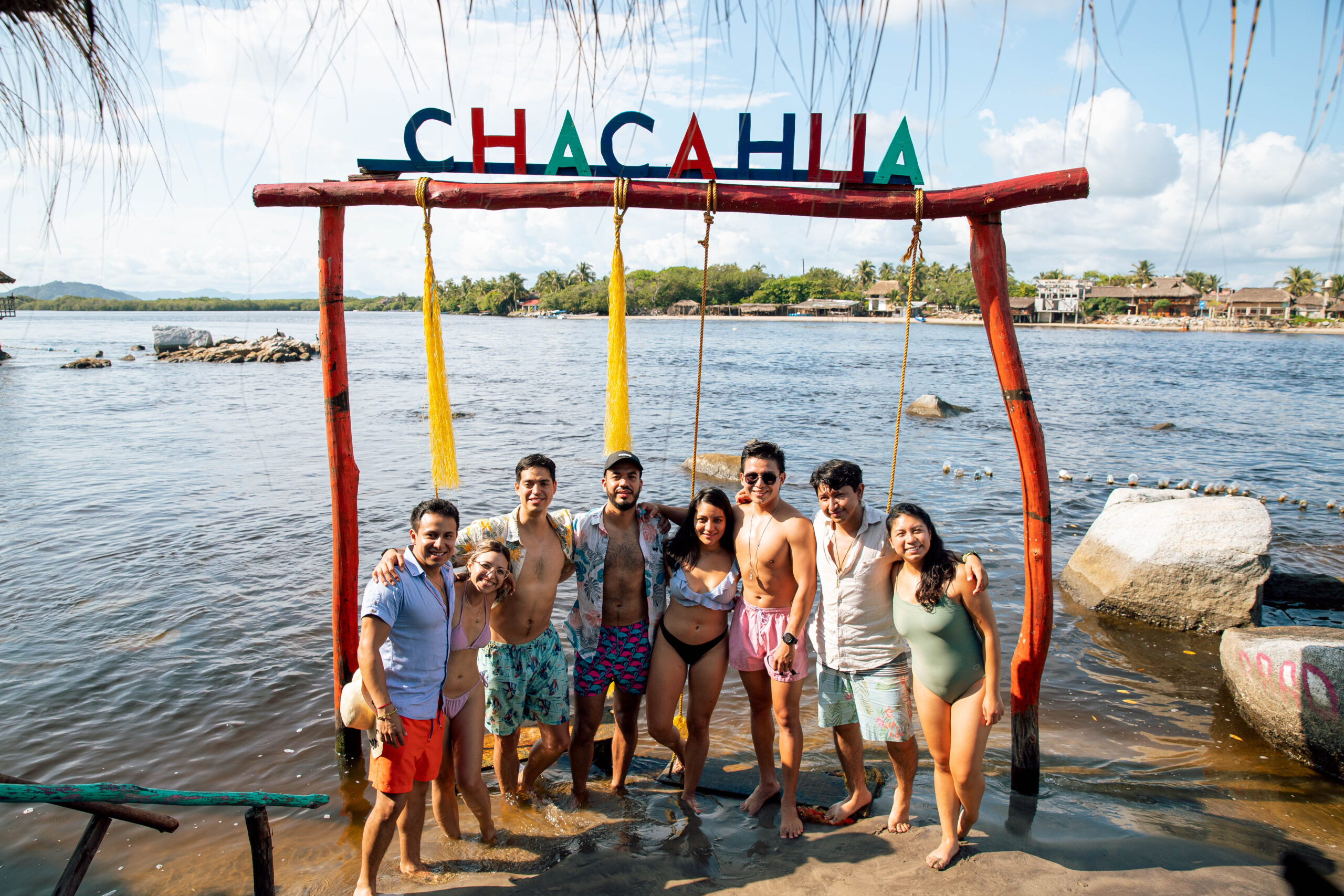
The boat docks at the village of Chacahua — a small Afro-Mexican fishing community on the barrier island between the lagoon and the Pacific. The village has no cars, no paved roads, and no tourist infrastructure beyond a handful of small restaurants serving the fish and seafood the community catches daily. You arrive as a visitor to a working village, not a tourist attraction.
The tour includes one dish of traditional Oaxacan food — prepared locally, reflecting the flavors of a community that has developed its own distinct cuisine at the intersection of Afro-Mexican, indigenous Mixtec, and coastal Pacific traditions. Vegetarian options including quesadillas, rice and beans, salads, and fruit are available with advance notice.
Hike to El Arco del Amor — Sunset at the Pacific Cliffs
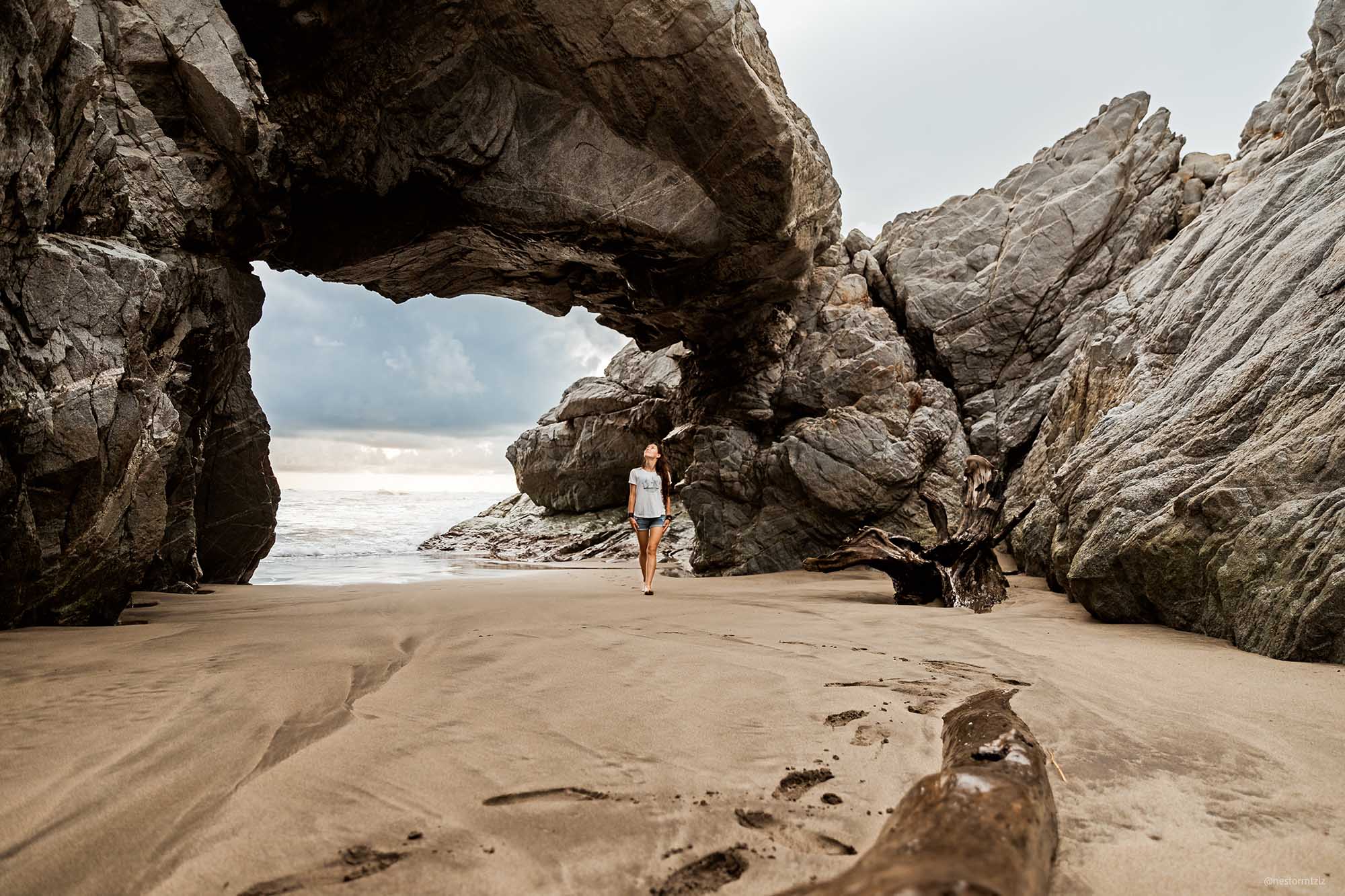
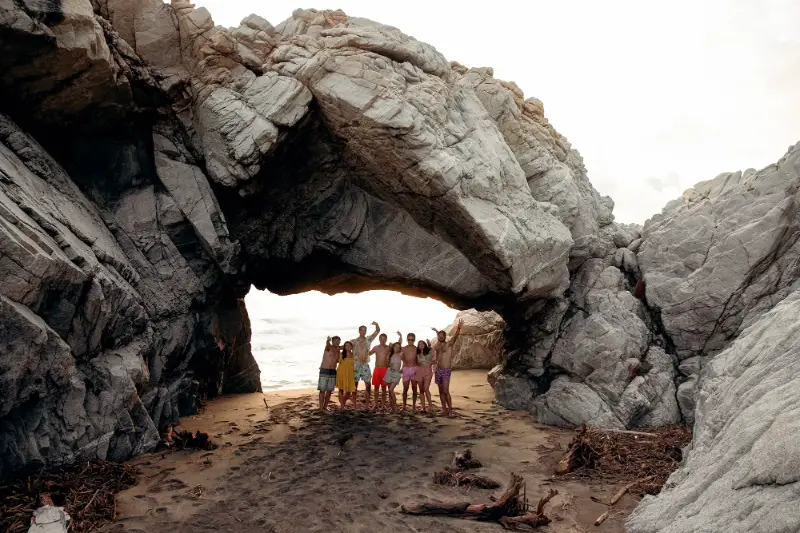
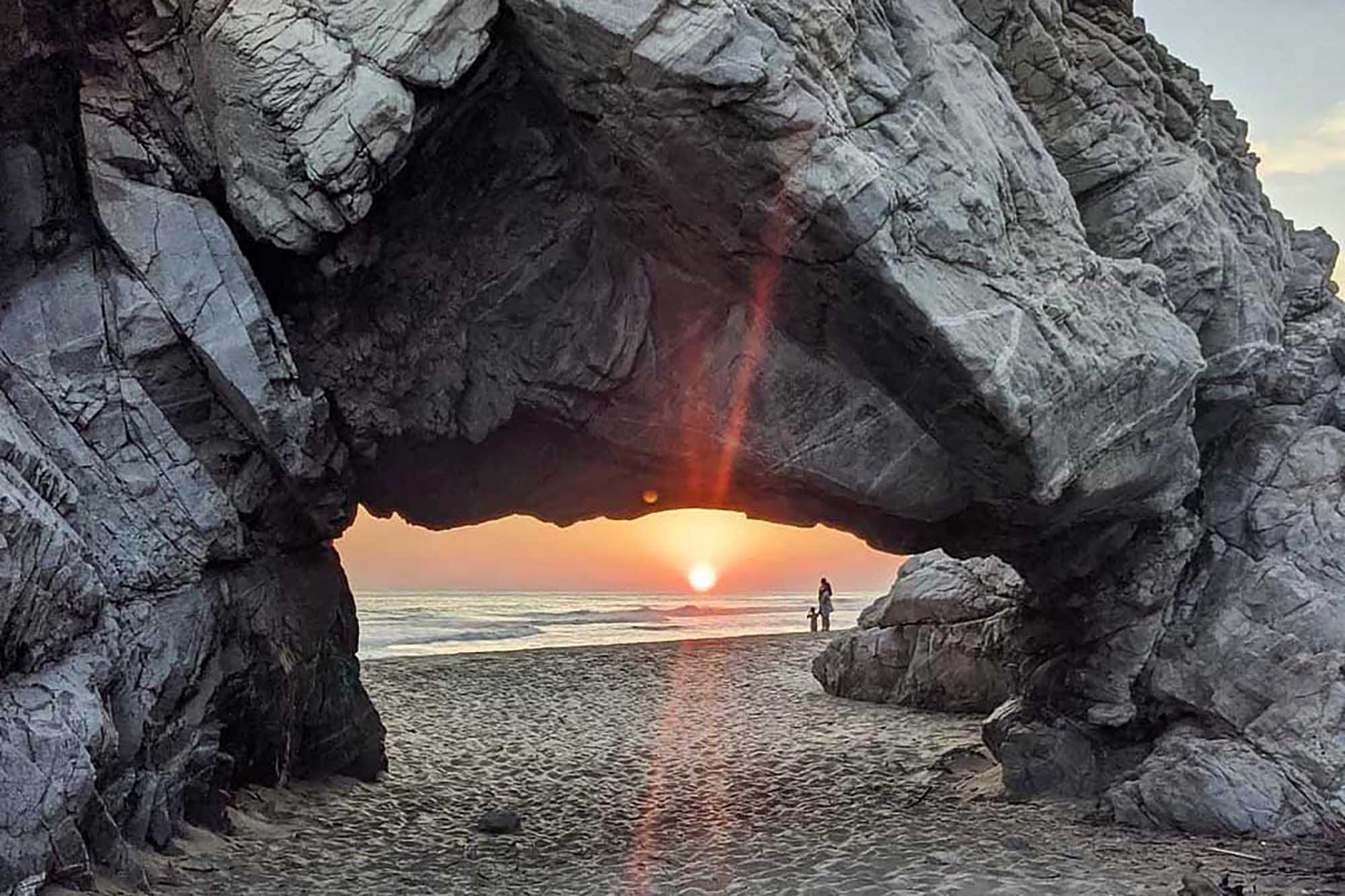
From the village, a trail leads through beach vegetation to El Arco del Amor — a natural rock arch on the Pacific cliffs that has become one of the most photographed natural formations on the Oaxacan coast. The hike is moderate — approximately 20 to 30 minutes each way on uneven coastal terrain. The timing puts you at the arch as the sun drops toward the Pacific horizon.
The sunset from El Arco del Amor is one of the most spectacular viewpoints on the entire coast — the arch frames the Pacific horizon, the cliffs drop to the ocean below, and the light at this hour turns everything gold and then red before the sky transitions to the deep blue of early evening. This is the moment most guests describe when they recommend this tour to others.
Bioluminescent Lagoon Swim After Dark
After the sunset, as darkness settles over the lagoon, the tour moves to the bioluminescent swim. The lagoon channels around Chacahua host concentrations of dinoflagellates — microscopic organisms that emit cold blue-green light when disturbed by movement. In the darkness, every movement in the water produces light: your hands glow, your body leaves trails, and the water around you pulses with each stroke.
This is the same phenomenon as the dedicated bioluminescence tour, but experienced in the specific context of Chacahua National Park — surrounded by mangrove forest, under a sky with no light pollution, after a full day that has already taken you through ecosystems most visitors never see. The combination amplifies everything.
Return to Puerto Escondido
The boat returns you to Zapotalito and the vehicle returns to Puerto Escondido — arriving approximately 8 hours after departure. Most guests spend the drive in silence, processing the day. The bioluminescent swim has a way of making everything that came before it feel like it was building toward that moment.
Chacahua’s Afro-Mexican Community — A History Worth Understanding
The community of Chacahua is one of several Afro-Mexican communities on the Oaxacan coast — descendants of enslaved Africans brought to New Spain in the colonial period, who established free communities in the coastal areas that Spanish colonial administration left largely ungoverned. These communities developed distinct cultural practices, music, food traditions, and relationships with the coastal landscape that persist today.
The Costa Chica region of Oaxaca, which includes Chacahua, was only formally recognized as a distinct ethnic group in the Mexican constitution in 2016 — a recognition that came after decades of organizing by Afro-Mexican communities who had been rendered officially invisible by the national narrative. When you visit Chacahua, you are visiting a community with a deep and specific history. Your guide will give you the context to understand what you’re seeing.
Best Time to Visit Chacahua National Park
Chacahua runs year-round, but the experience varies significantly by season. The dry season (November through April) delivers the clearest skies for the sunset at El Arco del Amor and the best bioluminescence visibility on new moon nights. Bird diversity peaks during the October through March migration season when North American species join the resident populations. The rainy season turns the mangroves intensely green and fills the lagoon channels — the boat journey through the islands is extraordinary in lush condition.
New moon nights produce the most dramatic bioluminescence — contact us before booking and we will advise on moon phase conditions for your preferred date.
Private Chacahua National Park Tour — Up to 20 People
Private tours are available for groups of up to 20 people. A private Chacahua day means the boat, the guide, and all experiences — mangrove journey, sunset at El Arco del Amor, bioluminescent swim — are exclusively yours. Ideal for families, friend groups, special occasions, and anyone who wants the park without sharing it. Contact us via WhatsApp for availability and pricing.