

A short drive from Puerto Escondido, the landscape changes completely. Manialtepec Lagoon is a coastal wetland ringed by mangroves, where fresh water, salt water and forest meet to form one of the most rewarding ecosystems on the Oaxacan coast — and one of the best places to watch birds in southern Mexico.
Most travellers hear about Manialtepec because of its bioluminescence. That is a genuinely remarkable phenomenon, but it is a night-time event, and treating the lagoon as only that leaves out most of what makes it interesting. By day, the mangroves, the birds and the wildlife take over.
Short answer
Manialtepec Lagoon is a coastal wetland near Puerto Escondido, Oaxaca, known for its mangroves and its high diversity of birds and wildlife. It is best visited by boat, early in the morning or late in the afternoon, for nature and birdwatching; on suitable nights during the rainy season it can also show bioluminescence.
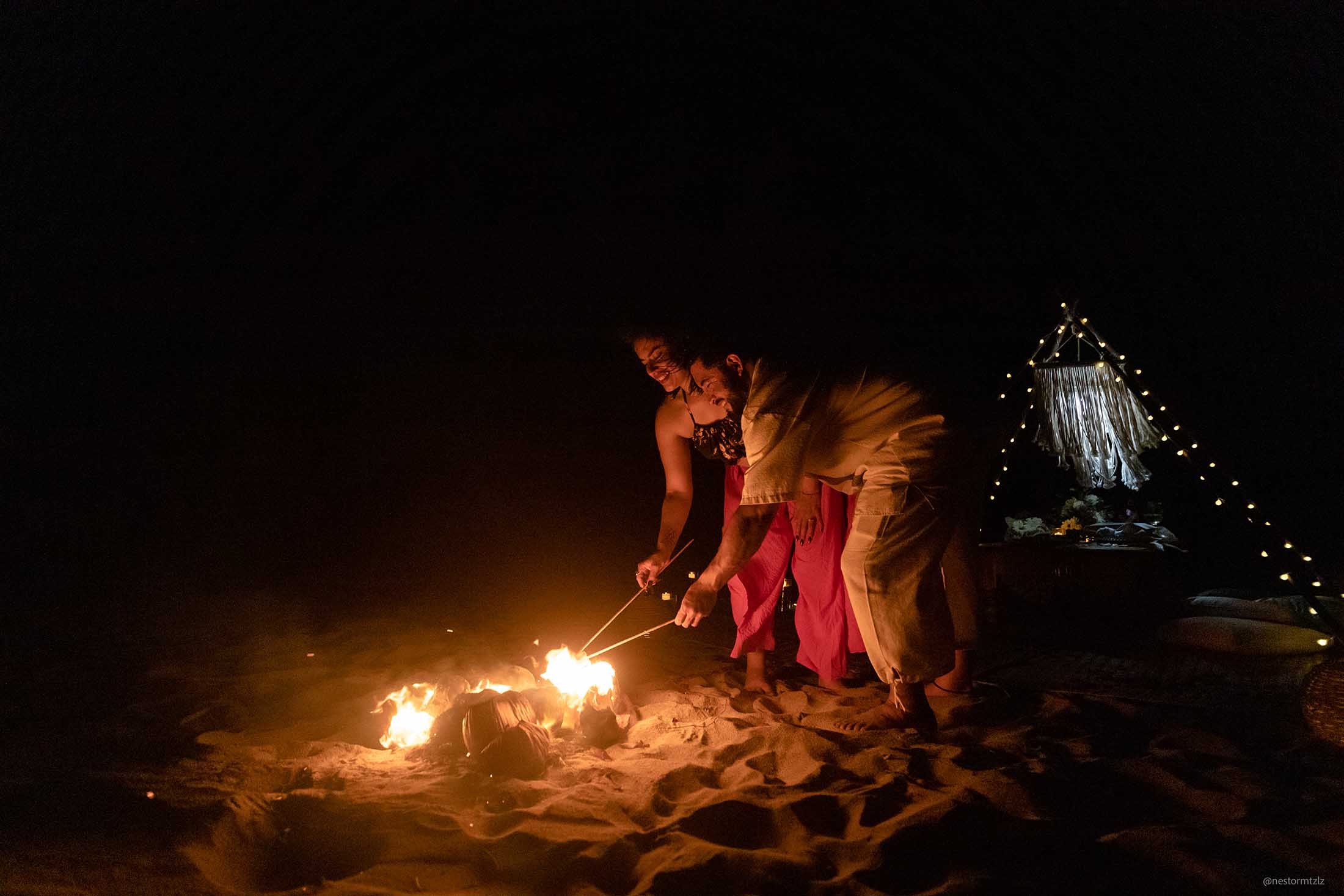
Where is Manialtepec Lagoon?
Manialtepec sits on the coast of Oaxaca, close enough to Puerto Escondido that you can fit it into a holiday without dedicating a long travel day to it. That matters more than it sounds: many of Mexico’s great wetlands require an expedition, and this one does not.
The lagoon is part of Oaxaca’s coastal wetland system. The State Government lists Manialtepec–Portesuelo among the most significant wetlands in the state for its ecological importance and biodiversity. For the visitor, that proximity creates an unusual opportunity: Pacific beaches, mangroves, lagoon habitats and serious wildlife in a single trip. Our guide to what to do in Puerto Escondido puts the options in order.
What kind of ecosystem is it?
Manialtepec is a dynamic coastal lagoon system. Mexico’s National Institute of Anthropology and History (INAH) describes a lagoon roughly 15 kilometres long, fed by a mix of fresh, salt and thermal water — a combination that produces unusual ecological conditions.
The mangroves are the heart of it. Red and white mangroves dominate, and INAH notes that some reach up to 15 metres. A mangrove is not just trees standing in water: the root systems shelter aquatic life, support food chains, and give birds places to feed and rest. The State Government of Oaxaca treats mangrove health as one of the main indicators of the lagoon’s overall condition.
If you would rather move through those channels slowly and quietly, our mangrove kayaking tour is another way in.
Why Manialtepec is so good for birdwatching
Open water, shallows, mangrove channels and surrounding vegetation create several distinct microhabitats within a small area. That variety is what makes the lagoon so productive for birders.
INAH specifically mentions herons, ibis, pelicans and kingfishers among the birds found here. Environmental documentation submitted to SEMARNAT records an exceptional richness of birdlife in Manialtepec and its surrounding area, with historical counts in the hundreds of species — though exact figures vary by survey area and period, so we would rather not turn a technical inventory into a marketing promise.
Birds to look for
- Herons and egrets
- White and glossy ibis
- Brown pelicans
- Belted, green and Amazon kingfishers
- Roseate spoonbills, when they show up
- Ospreys and other raptors
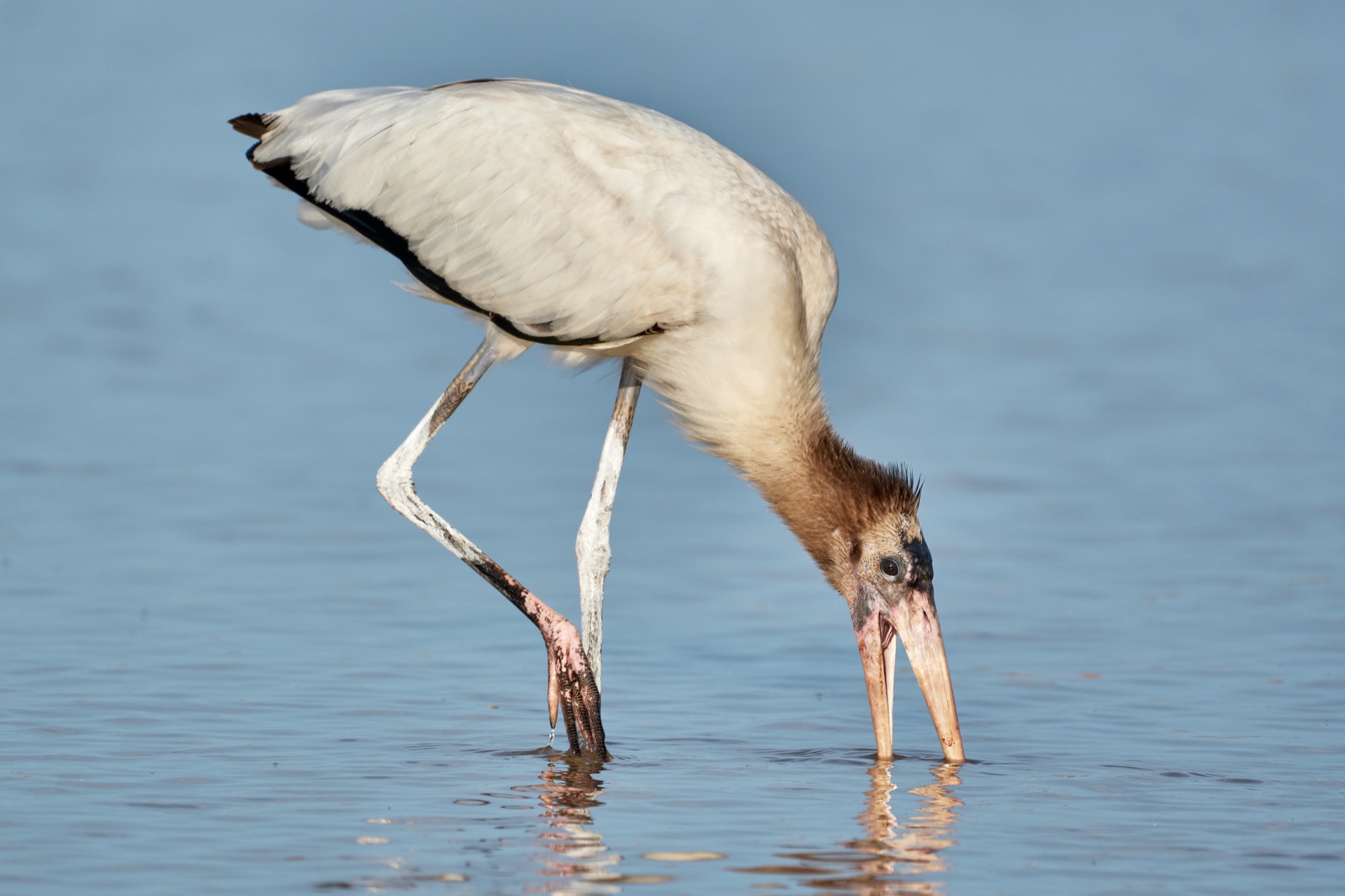
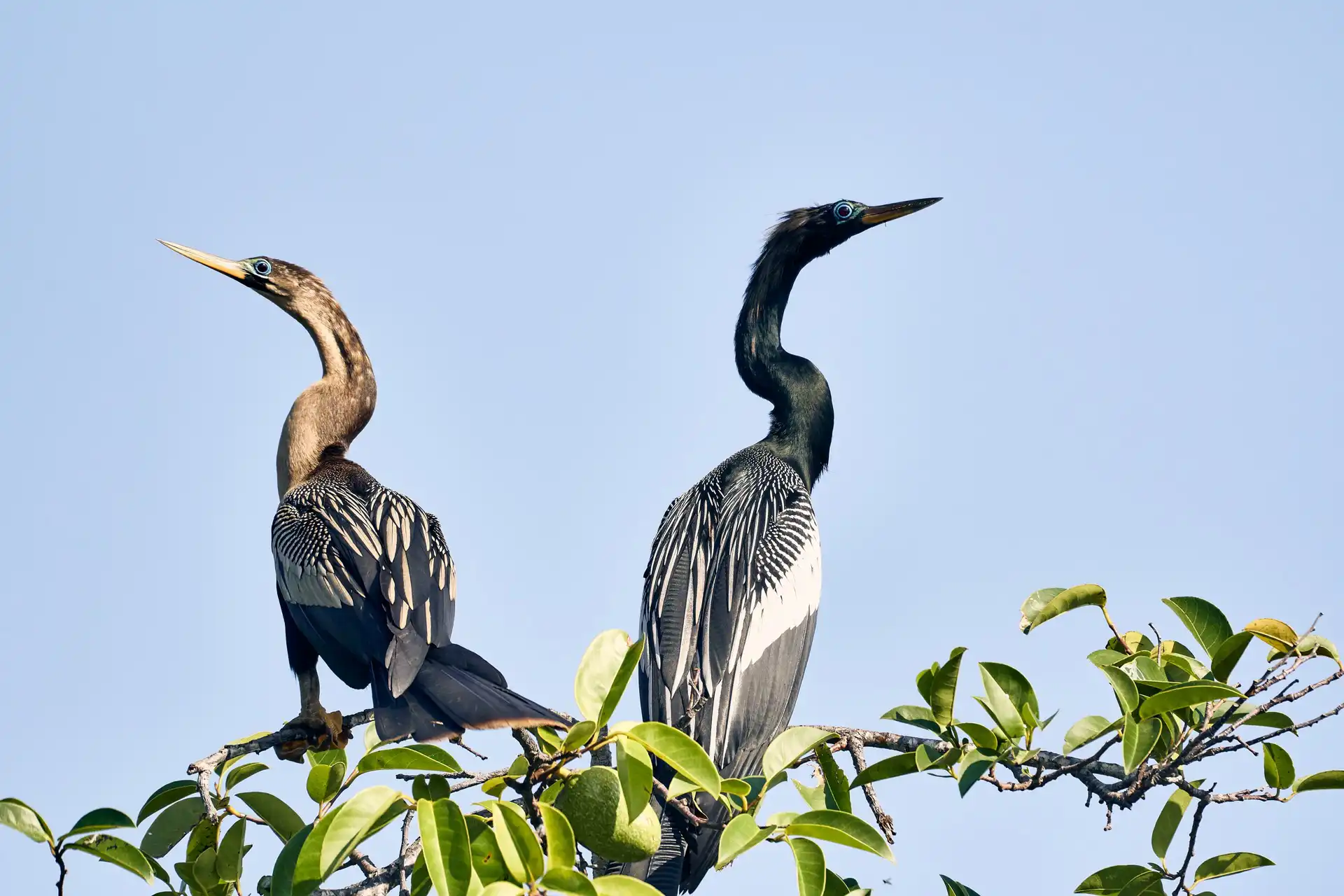
- Wood storks, anhingas and parakeets
- Pacific flyway migrants, in season
No two trips are the same. Which species are present, and how active they are, depends on season, time of day, weather and plain luck.
Best time of day to watch birds
Early morning is usually the most productive window: wading birds feed actively in the shallows, raptors take their first flights, and the light comes in at an angle that makes everything easier to see and photograph. Late afternoon has a different appeal — herons, storks and ibis return to roost in the mangroves, and that collective movement is one of the most striking things a coastal wetland does.
What no hour can do is guarantee a particular species. This is wildlife watching, not a zoo.
What the lagoon tour is actually like
The best way to understand Manialtepec is from the water, where the structure of the mangrove becomes visible and the birds are within reach of binoculars.
Length
About 3 hours on the water
Sessions
Sunrise and afternoon
Boat
Small, reaches shallow channels
Included
Binoculars and the guide’s scope
Our birdwatching lagoon tour is built around exactly those hours, running as two sessions to cover both peaks of the day. Over three hours with a guide who knows the system, our team typically records between twenty and forty species. That is what we usually see, not a guarantee.
Current departure times, pickup arrangements and conditions live on the tour page, which is where to check before booking.
What other wildlife lives in the lagoon?
Birds are the headline, but not the whole story. INAH lists iguanas, raccoons, wild boar and crocodiles among the animals present around the lagoon, and fish and other aquatic organisms underpin the whole system.
Seeing wildlife depends on conditions on the day. Animals should never be chased, fed or handled to get a photograph.
Are there crocodiles in Manialtepec?
Yes. The American crocodile is part of the lagoon’s ecosystem and has been the subject of conservation work and study by Oaxaca’s environmental authorities.
That is one more reason to follow your guide’s instructions and not swim independently in unauthorised areas. Visiting a wild ecosystem means accepting that you share it with its species — not that it has been adapted to behave like a swimming pool.
Daytime nature trip or bioluminescence at night?
By day, Manialtepec is a nature experience: mangroves, birds, wildlife, landscape, navigation. At night, attention shifts to bioluminescence, produced by microorganisms that emit light when the water moves.
INAH points to the rainy season, roughly May to November, as the period when bioluminescence is most often observed. Intensity varies and it should never be sold as guaranteed. If that is your priority, current conditions are on our bioluminescence night tour page.
The two are complementary rather than competing. The night trip shows you an extraordinary phenomenon; the day trip lets you understand the ecosystem that makes it possible. There is no need to do both in one day — many travellers prefer one outing for birds and another for the glow.
Best time of year to visit
The lagoon rewards a visit year-round, but the landscape, the birdlife and the water change with the season. Spring migration (March to May) and autumn migration (September to November) bring passage species on top of the residents. The dry season, roughly November to April, tends to offer clearer water and steadier weather for boat trips, while the rainy season brings lush vegetation and active breeding behaviour.
If you are chasing one specific species or the bioluminescence, check conditions before booking. If you want to understand the wetland itself, the visit does not hinge on any single species or phenomenon.
What to bring
- Light, comfortable clothing
- Sun protection and a hat
- Water
- Suitable footwear
- Your own binoculars, if you have them
- Camera or phone
- Rain protection in season
- Patience, more than gear
If you use repellent or similar products, follow the operator’s guidance so the impact on the wetland stays minimal.
Photographing birds and nature
You do not need professional gear to enjoy Manialtepec. Binoculars usually add more to the experience than trying to photograph every animal. If you shoot, a telephoto lens lets you keep your distance, and it is worth avoiding any deliberate approach to nests or animals for the sake of an image.
In nature photography, no good picture justifies disturbing its subject.
Responsible tourism in Manialtepec
Mangrove conservation is central to the health of the lagoon, and Oaxaca’s environmental authorities have run specific mangrove recovery work in Manialtepec. As a visitor, a few simple rules keep your impact low:
- Take your rubbish with you
- Do not feed wildlife
- Do not touch or capture animals
- Keep your distance from birds and crocodiles
- Leave plants and natural material where they are
- Respect mangroves and sensitive areas
- Follow your guide’s instructions
- Keep light and noise to a minimum
Manialtepec or Chacahua?
Both are outstanding, but they play different roles in a trip from Puerto Escondido.
| Manialtepec | Chacahua | |
|---|---|---|
| Distance | Very close to Puerto Escondido | Further along the coast |
| Typical length | Half a day | A full day |
| Protection status | Oaxacan coastal wetland | National Park |
| Main strength | Birds, mangrove, proximity | Scale, beaches, biodiversity |
| Best if… | You are short on days | You want a destination day |
The Chacahua Lagoons are a far larger system inside a National Park — the Chacahua National Park tour is the full outing. With a few days to spare, they are not substitutes: they show two different faces of the Oaxacan coastal wetlands.
Is Manialtepec Lagoon worth visiting?
Yes — particularly if you want to see more of Puerto Escondido than its beaches. Manialtepec shows how mangroves, birds, reptiles, fish and coastal communities all belong to the same landscape, and its closeness makes it one of the most accessible nature experiences on this stretch of coast.
Visit Manialtepec with Eco Adventures
We think watching wildlife is far more interesting when you understand what you are looking at. Our trips get you close to the ecosystems of the Oaxacan coast from a local, responsible perspective.
Frequently asked questions about Manialtepec Lagoon
What is Manialtepec Lagoon?
A coastal lagoon system near Puerto Escondido, Oaxaca, surrounded by mangroves and rich in birdlife and other wildlife.
What birds can you see there?
Institutional sources mention herons, ibis, pelicans and kingfishers, alongside many other resident and migratory species.
Are there crocodiles?
The American crocodile is part of the lagoon’s wildlife. Any sighting depends on natural conditions and should be enjoyed from a distance.
Does Manialtepec have bioluminescence?
Yes. Under the right conditions, bioluminescent microorganisms can be seen. INAH highlights the rainy season, roughly May to November.
Is it better by day or at night?
It depends what you are after. Days are about mangroves, birds and wildlife; nights are about the bioluminescence.
Can you visit with children?
It can suit families depending on the trip, the children’s ages and conditions on the day. Check the specific tour conditions before booking.
Do I need binoculars?
Not essential — we provide them on the tour — but if you own a pair you are used to, bring them.
How far is it from Puerto Escondido?
Close. Manialtepec is one of the most accessible nature trips from Puerto Escondido, which is exactly why it fits so easily into a short stay.
Last reviewed: 18 September 2026. Institutional sources: INAH, the State Government of Oaxaca, and environmental documentation submitted to SEMARNAT. Field and operational observations come from the guide team at Eco Adventures Puerto Escondido.

